
When your hearing feels dampened, it can interfere with your daily routine and leave you feeling withdrawn from your environment. Many people immediately fear they’re experiencing irreversible hearing loss when, in reality, the cause may be something much simpler: earwax buildup.
Grasping the distinction between earwax buildup vs. auditory loss can help you know when a simple solution is possible and when it’s time to seek a hearing assessment. There is no reason to feel overwhelmed if auditory inputs seem muted. An exam can help you get to the bottom of it, but in the meantime, here’s what you need to know about earwax buildup (also known as earwax blockage) vs. permanent impairment.
Identifying the Symptoms of Canal Obstruction
Your canals generate wax as a natural protective process to preserve health and keep debris away from the eardrum. Issues occur when too much wax accumulates or turns clogged.
Signs of a clog often feature:
- Progressive or sudden muffled hearing
- The perception that there is a physical plug in the canal
- General ear irritation or mild aching
- Buzzing in the ear (tinnitus)
- Moments of clearer hearing after a jaw stretch or chewing
Because blockages are tangible, they frequently affect just a single ear at a point rather than each uniformly. The positive aspect is that clinical removal typically results in an immediate return of your natural hearing levels.
What Hearing Loss Feels Like
Permanent hearing shifts, often triggered by aging or loud environments, are gradual and remain even if the ear is completely clear.
Signs of actual auditory impairment may include:
- Struggling to follow discourse when background noise is audible
- Constantly asking others to restate themselves
- Adjusting media levels to a point that others find uncomfortable
- Difficulty hearing high-frequency tones like birds or children’s voices
- A balanced decrease in auditory ability in both sides
Importantly, auditory loss is an intelligibility concern that rarely involves the sense of physical fullness found with wax.
Quick Guide: Earwax vs. Hearing Loss
A few basic signs can help you determine whether you are contending with a manageable blockage or a more permanent shift:
- Development: Cerumen muffling can be rapid, but lasting loss takes years
- Resolution: Wax-related hearing shifts are usually temporary; auditory impairment is often permanent
- Symptoms: Fullness and irritation indicate wax; word intelligibility challenges indicate impairment
- Ear Balance: Unilateral dull sound points to wax, while bilateral suggests hearing loss
The Dangers of At-Home Ear Cleaning
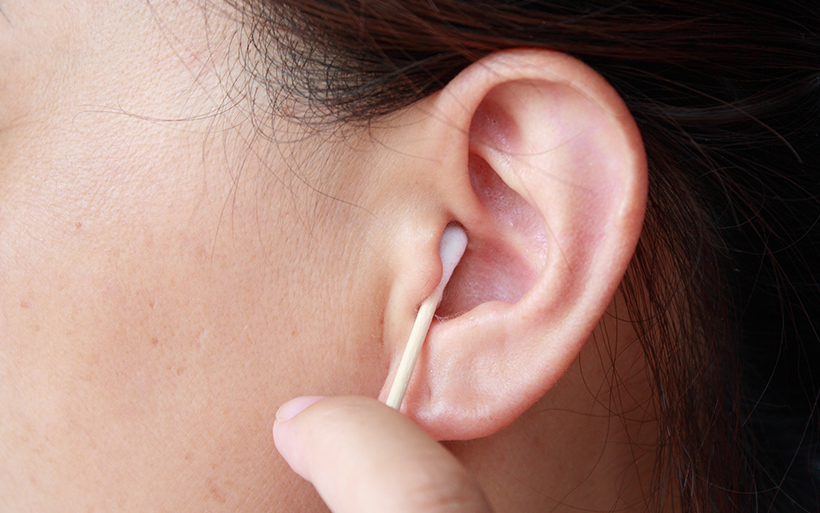
Many people make the error of attempting to clear a perceived obstruction themselves using swabs or home items. Unfortunately, these can push wax further in and exacerbate the situation.
Medical specialists caution that inserting anything smaller than your finger in your ear can lead to tympanic damage and severe clogging.
On the other hand, presuming a concern is merely wax when it is actually auditory impairment can hinder you from getting the help you require to remain connected.
How a Clinical Evaluation Helps
A specialist can employ an earlight to immediately see if a mechanical blockage is present.
If cerumen is found, safe extraction often clears symptoms on the spot.
When the ear is clear but sound remains muted, a diagnostic test is necessary to evaluate your auditory integrity.
The National Institute on Deafness and Other Communication Disorders (NIDCD) recommends prompt assessment anytime changes in hearing interfere with your daily life.
Closing Points on Earwax and Hearing Health
Muted auditory quality is hardly a definitive sign of chronic loss.
Very often, the problem is simply a collection of cerumen that can be quickly resolved.
A clinical assessment will provide you with the answers you require to advance without worry.
In the end, an expert consultation is the only reliable way to differentiate between a fleeting obstruction and a permanent change.
Finding answers promptly can avert pointless worry and ensure you obtain the right treatment at the right moment.
Rather than guessing what is wrong, schedule a rapid consultation with our audiologists to uncover the truth.